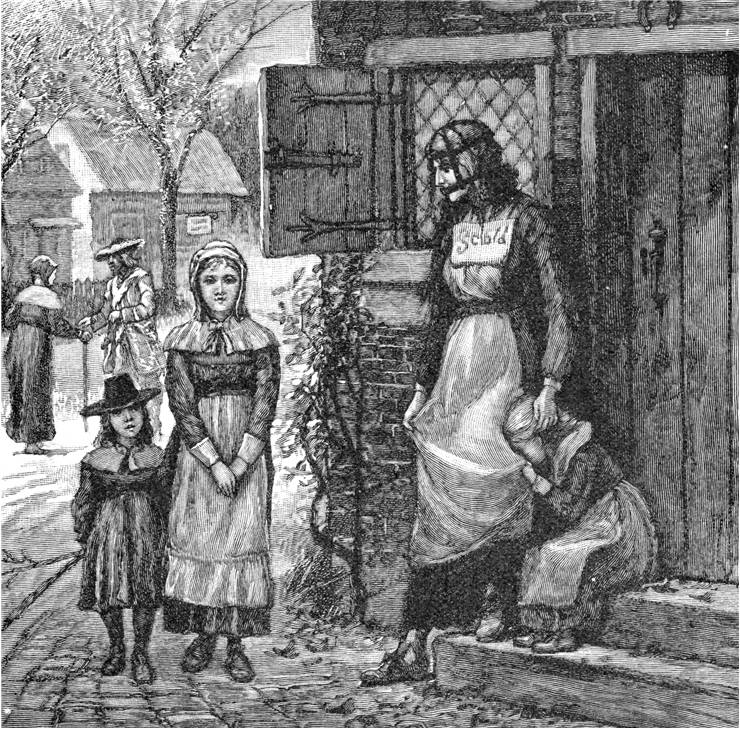
Scold's Bridle - History of the Branks
Scold is a woman who nags or grumbles constantly. The bridle is a part of horse equipment used to direct a horse. It includes headstall that holds a part that goes in the mouth of a horse and the reins attached to the bit.
Woman of the lower class who was characterized by unpleasant, gossiping, nagging, scolding, aggression or being a witch was punished by wearing the scold’s bridle. It was also called “The gossip’s bridle”, brank’s bridle or branks. Gossip was believed to be devil’s tool.
During the medieval times, many instruments were made for torture, humiliation, and interrogation. These cruel tortures were acceptable. People believed that pain could determine someone's innocence or guilt. There were no laws to protect prisoners and accused people of torture.
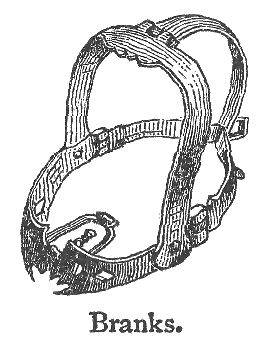
Scold’s bridle was iron muzzle with iron framework enclosing the head, usually of a woman, used for torture and humiliation. The humiliation moment included a public display and punished people were led through town. Scolds could be punished by attaching them for display to town cross. These acts were reminders for people how to behave. Husband could parade his wife, with scold’s bridle mask, around town.
So we get the idea that this torture and humiliation instrument was meant to stop mostly the women from talking. A bit was with spikes, put in the mouth on the top of the tongue, so the pain made it impossible to speak. It had a chain attached to the side of the mask so the woman could be lead through the town or put on some place for a period. Husband could put his wife in this mask and place her on the hook in the wall at the side of the fireplace. The victim led through town was in a center of attention and could suffer verbal abuse, spitting and worse. Women could be beaten, shook about the head, causing broken teeth and jaw, blood and vomit.
The nature of punishment can be seen as more complex. Speaking publicly for women was an immodest act for those times. Women with vicious tongue could be a threat to authorities. Women should be stopped from rioting, challenging priests and defying husbands.
It was used in a 16th and 17th century in England, Scotland and Wales. In Germany bell was added to draw more attention. Scold’s mask was also used on the man. The decision for punishment could be made by local elders elected into council called the Session.
It was a mirror kind punishment that reflects the nature of the crime in often physical form. If a woman was accused of witchcraft or unpleasant speech, she was punished physically not to be unable to speak.